My Health and Wellness Plan Back to Strong and Happy

There are a lot of blogs out there that are or have shared their wellness journey’s and I realize some of them can be construed as not health and wellness or they don’t need to be doing this journey because from the outside they look healthy and happy. Key phrase here is from the outside, we never know what someone is going through on the inside because we cannot see it. 

This is actually a very vulnerable post for me, but I think if I am up front and honest about how I have been feeling the last few years then maybe it will help someone else have the strength to do the same. For those of you who do not know, I was diagnosed with celiac disease just over 3 years ago from this post date. The first year after being diagnosed I was relieved, and had a great year of feeling better then I have ever felt – I finally knew what it felt to be “normal.” But then I went out to eat one day and long story short I was given the wrong bread and I became ill for 8 months after. Since this incident I have not been able to get myself back on that high feeling, and instead I seem to have hit a plateau of, “things are the way they are and this I just how it is going to be from now on.” It seemed like no matter what I did my symptoms would get a bit better but then come back, for a lack of better words, in a raging shit storm.  I have not been able to get my TTG levels to drop in my blood (antibody test for celiac disease) for over 2 years. This has discouraged me and made me unmotivated because it just seemed like, no matter what I did, my levels were not going to drop any lower and I would always have symptoms appear out of no where. One day I’d be happy go lucky and feeling great and the next it was like I had eaten the wrong bread again.

I guess the best way to describe this is by explaining what I used to be like. I was very active and loved it, I loved going to the gym and playing sports, I never stopped moving. I woke up excited about life and used to get up around 5:30-6:30am on my own without an alarm and never hit the snooze button. I would wake up and think, I’m going for a walk or just excited about what it was I was going to eat that morning.

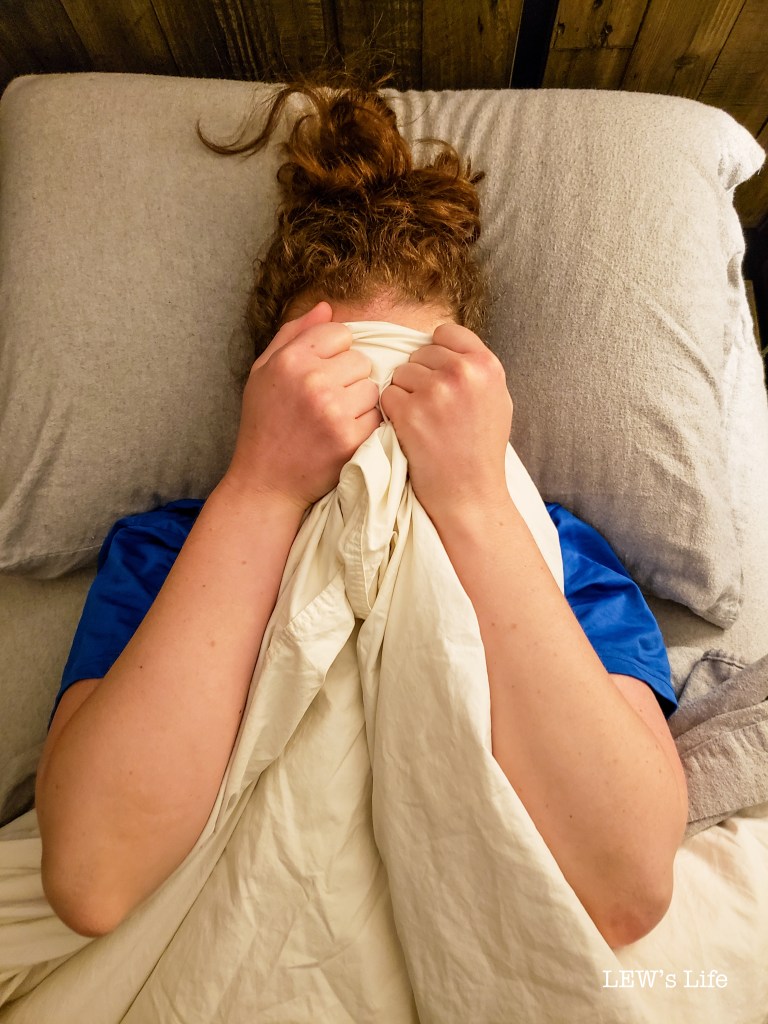
Now, as I’m sure you can guess, it is the opposite. Over the last 2 and a bit years I have lost motivation and drive, I was always physically and mentally exhausted or not feeling well. It became very hard to get out of bed and I was always hitting the snooze button. I stopped being active and doing the things I used to live for, I became lost. I know having a physically demanding job that I absolutely love did not help with my motivation to be active, but I used to be able to look past this and still get to the gym and do something for me. 

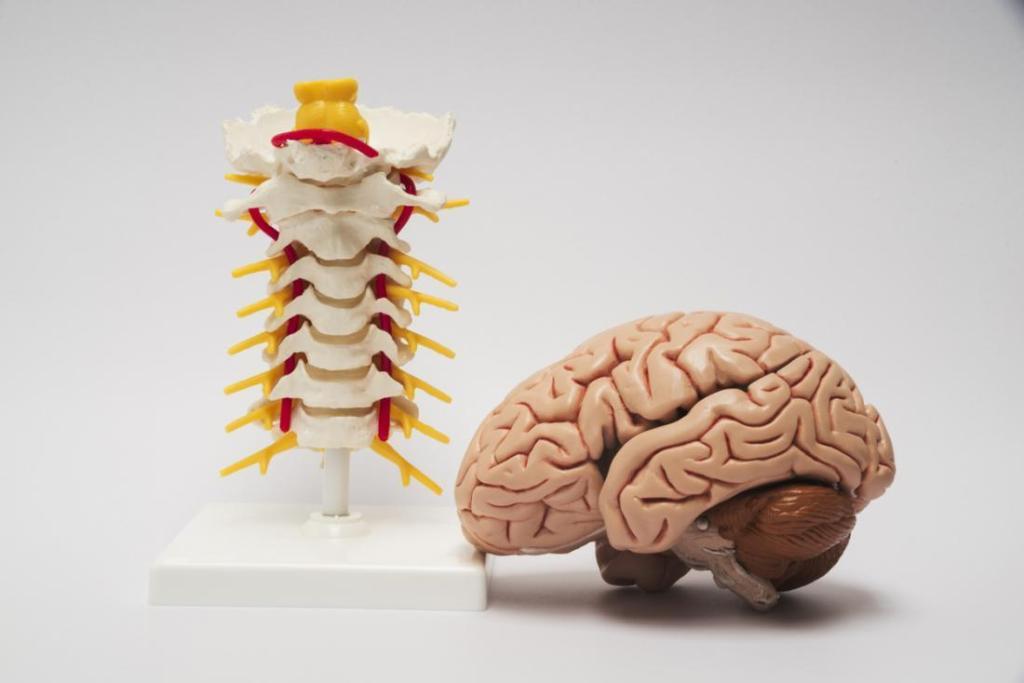
I really feel as though it took the pandemic and being forced to stop working for me to realize where I had brought myself. When I was forced to stop I then started to feel all my aches and pains in my body. My left shoulder keeps going numb with neck pain and my right hip will scream at me if I do too much sitting or moving. The kind of pain that will make you wince and look as though you have aged 50 years over night. As an Athletic Therapist I know and have seen this all too often with my patients and know that I have lost my strength, mobility and flexibility. Once I build these back up and correct my muscle imbalances, I will live up to my last name of Walker and be an unbeatable Jedi again. I have been on again, off again, bloated with mental challenges and brain fog, anxiety, decreased motivation and drive, and decreased focus. If there is anything I have noticed over the last few years it is that the gut brain connection is a true and serious thing.

However, with all of that being said, I am happy to state that as hard as things have been in the past they are improving and from this day forward I will not accept anything but. It is going to be challenging and I will of course still have off days – but I will not let them drive me away from my goal of becoming strong and happy again.

So you may be thinking, how are you going to do this? Excellent question, here is how:

  1. Fitness: I will be working on my muscle imbalances and correcting my biomechanics. I will be doing this through mobility, flexibility and strength. There needs to be an equal amount of all of these to have a well balanced musculoskeletal system. So I will be making myself a fitness plan that will include all three of these components. 
  1. Nutrition: I have been dabbing into this component for the last 2 months already and I am happy to state that following the diet I have been doing has helped to decrease my TTG antibody levels in my blood and increased my iron. There is still a lot to improve in this department but it is a start! For the first 3 weeks I followed the hypoallergenic diet without consuming any grains. I was to cut out processed foods, dairy, certain meats, eggs, soy, peanuts, corn, tomatoes, artificial butters and sweeteners, refined sugars, and glutinous grains (obviously for me) but the naturopath had me cut out all grains just for the first 3 weeks. I followed this to a T and even continued it past the 3 weeks because of how much better I felt, but then, my digestion started to go wonky again and my energy has dropped. This is why I feel these full on restrictive diets are not meant to be eaten forever (other than the food you have to avoid for health reasons).

    Science actually shows that if you are under eating you will have immune problems and digestion issues. It may seem like you have a food intolerance but in reality your restrictive eating will cause digestive issues because the digestive system is not receiving enough energy, and if it does not get enough energy it cannot properly extract the nutrients your body needs to function. Mind.Blown. Therefore, I have decided that following a very restrictive and paleo diet long term is not the way to go for me. I believe my TTG levels being high is due to cross contamination in food that is processed and made in restaurants that are not careful. Also, having a very restrictive diet has made me very anxious around food, I’m always afraid whatever it is that I am eating will cause food intolerance symptoms. I know I do have some food intolerances because after eating certain things like corn and oats, I instantly have full body autoimmune symptoms. However, I do wonder, if I get my TTG levels to lower to zero, will these intolerances go away? Because technically once I get those levels to zero, that means my gut lining has finally healed and it will be able to digest food properly again. So as long as I stay away from my kryptonite, gluten, I should be okay to eat a variety of food again without feeing sick. That thought actually makes me so excited and pumped to get my gut lining healed.

  2. Mindfulness: This one is HUGE! I have been trained in transcendental meditation and started doing it back when I was in university as I used to have a huge amount of exam anxiety. This technique helped me get through my certification exams, and to be honest, I stopped doing it, and that was a big mistake. I told myself I was way too busy and did not have the time to sit and meditate for 20 minutes twice a day, but this is the exact person that needs to make time for exactly this as they typically need it the most. Since I have started meditating again, I cannot even begin to explain the benefits I have experienced in my everyday life. My thoughts are clearer, I do not snap as much if at all, I’m positive, focused and motivated. Mindfulness does not just have to do with meditation, it also includes living intuitively. If you have a negative thought come into your head, change it right away for a more positive one. If you are overworked, cut your hours. Our bodies need us to start living more intuitively because we all need to start listening to our bodies and giving it what it wants and needs.

These are the three ingredients to not just my wellness journey, but I believe everyone’s. If the health of our mind, nutrition and fitness does not exist, then we are more likely to develop muscle imbalances that will cause injuries. We may have a leaky gut or improperly functioning digestive system because we are not fuelling it properly or moving to help stools pass through your bowels or have a horrible gut brain connection where now the health of your gut effects your mental health and vice versa. All three of these components are absolutely essential for an overall well balanced health and wellness plan, you cannot do one without the other. It only took me siting down and writing this blog for me to truly make this connection. I always tell my patients to include all three but it has really clicked with me as to why.

Regardless if you are on a wellness journey of your own or want to see me through mine, I hope you find what it is you are looking for, because the sun really is brighter on the other side.

Please Keep This Disclaimer in Mind:

Articles are for educational purposes only and are not intended to diagnose, treat, cure or prevent diseases. We cannot and do not provide medical advice or specific advice on products related to treatments of a disease or illness.

You must not rely on the information on our website as an alternative to medical advice from your doctor or other professional healthcare providers.

You should never delay seeking medical advice, disregard medical advice or discontinue medical treatment because of information on our website.

It is your responsibility to consult with your professional health care providers before starting any diet changes, exercise or supplementation program, and before taking; varying the dosage and / or ceasing to take any medication.

We do not collect any personal information or store cookies.  You can turn off cookies on your web browsers.


What is Celiac Disease?

Here is a video of me on my YouTube channel talking about what celiac disease is and highlighting some of the main facts that I think everyone should know about it.

Please Keep This Disclaimer in Mind:

Articles are for educational purposes only and are not intended to diagnose, treat, cure or prevent diseases. We cannot and do not provide medical advice or specific advice on products related to treatments of a disease or illness.

You must not rely on the information on our website as an alternative to medical advice from your doctor or other professional healthcare providers.

You should never delay seeking medical advice, disregard medical advice or discontinue medical treatment because of information on our website.

It is your responsibility to consult with your professional health care providers before starting any diet changes, exercise or supplementation program, and before taking; varying the dosage and / or ceasing to take any medication.

We do not collect any personal information or store cookies.  You can turn off cookies on your web browsers.


Cross Contamination and Celiac Disease

This is a bit of a controversial but very important topic to bring up in the celiac community and to the rest of the world. This is important because when I was first diagnosed I was not told of the possibilities of cross contamination and how it would effect my overall healing. 

It does not take very much gluten to make a celiac very sick, only one crumb to be in fact. One crumb will start an autoimmune response in the body, and the symptoms could or could not be present. Cross contamination could possibly be one of the hardest things to keeping a 100% gluten free diet for someone who has celiac disease as there are so many hidden places gluten can possibly be found.

I did not know of all the places that could be an issue and I am still learning over 3 years later. Places such as a cutting board, wooden spoons, or even kissing your boyfriend after he dinks a glass of beer or eats one of those massive kebabs he loves so much . Coming up next are all of the places I wish I knew to be careful of sooner, including some possible problems with the FDA (this will be a post all on it’s own, coming soon).

Where can hidden places of gluten be found?

  1. Kitchen:

Cutting Boards: Any cutting boards that have cuts in them could be hiding unknown gluten, especially wooden cutting boards. Replace these for a cutting board that does not produce deep cuts, like a wood fibre cutting board. I bought one of these a while back and love them because the cuts in them push out rather then in. This is not affiliated, but the cutting board I found is called a Epicurean and can be found here. But also, when you get new cutting boards – label them gluten free specific just like anything in the kitchen so it cannot and will not come into contact with gluten.

Wooden Spoons: Gluten can become stuck to porous products in the kitchen, one of which can be wooden spoons.

Pots and pans, colander, panini press, waffle maker, bread maker, BBQ racks, stovetop, tabletop, iron pans and pizza stones: This may seem over the top, however gluten is very good at hiding in equipment with any scratches, small holes or crevices. Therefore, scratches in non-stick pots or pans will be a perfect area for gluten to hang out, same with a porous rock pan or pot. Small crevices on a stove top or inside a panini press or a waffle maker along with a bread maker (ie. imagine a pot of pasta water over flowing onto the stove top – I know we have all been there). No you do not need to go buy a new oven, however I would scrub every inch of the top and inside of that oven before you use it again for a gluten free meal, and replace any other equipment you can that was originally used for gluten containing food. Use a designated countertop, and if this is not possible, then wipe down and clean the area of any flour or gluten containing left overs of another meal or food preparation.

Note: Although this doesn’t fall into the cross-contamination area, it is worth noting that celiacs should take precautions against breathing in flour dust when using flours with gluten. Flour dust in the nasal passages can be swallowed and end up being digested. So be careful walking into gluten containing bakeries.

Kitchen Wash cloths, sponges, rags, brushes and dish towels: HUGE spot for cross contamination, be sure to be using a gluten free only sponge or cleaning utensil for washing dishes in your sink. The gluten will soak and stick to the wash cloth, sponge, brush, towel or rag. Label one that is gluten free and keep it away from anything gluten.

Toaster and Convection Oven: This was one of the first things I replaced in my kitchen when I first learned of cross contamination. The gluten crumbs will sit on the side, top and bottom of the toaster and oven and will then make its way into your gluten free toast. Remember: it just takes one crumb to cause an autoimmune response in your body as a celiac, have a dedicated gluten free toaster and convection oven.

Utensils: For forks, knives and spoons – be sure to wash these in warm soapy water and scrub well to decease the chances of a gluten meal transferring to your gluten free meal by mistake. I’ve looked into getting a travel set of utensils for out at restaurants – may seem like a bit much, but sometimes I get a utensil with left over food on them.

Pantry and Fridge: Spills or damaged packaging can spread all over a pantry or fridge (ie. flour). Be sure that if you do not have a gluten free specific cupboard or fridge to put all gluten free products on the top shelf so nothing can spill or spread from above down into your food. Best practice is to have a separate pantry and fridge, if you can, that is a dedicated gluten free space. 

Spices, processed foods, teas, condiments: These are sneaky areas that can and usually do contain a hidden source of gluten. Always be sure that you read the label of any processed foods you buy and be sure to buy the ones that do not have any gluten containing ingredients, it can be hidden as an ingredient that does not necessarily say “gluten or wheat.”

My rule of thumb, if the package says “may contain gluten” “processed in the same facility as gluten” I stay away from them. Being 3 years into my diagnosis, my TTG levels are still higher then they should be, and I have recently just been able to get them down lower than I have been able to in the last 2 years. My secret? I have cut out processed foods, and if I need to use them, I will only buy them if they say or have a “certified gluten free” label on it. Do your research on the product you are going to buy, contact the seller and find out where that food is being processed, you are not being a pain for protecting your health and asking questions. I know for me, the reasons I could not lower my TTG levels is because I was going out to eat at restaurants and eating processed foods. Do what you feel is right, but be sure the food you are buying is certified gluten free or do your research into the company because not all good companies have the certified symbol on their product.

Butter, margarin, jam, condiments jars; Avoid ‘double dipping”: Another huge area of cross contamination, when one uses a knife or other utensil and spreads the jam or condiment on to a gluten containing piece of toast then puts that utensil back into the jar, there will be crumbs going into that same jar. As I have mentioned, it just takes one crumb to make someone violently ill with celiac disease. The crumbs that have now been transferred into that jar or onto the slab of butter, can now make its way onto a piece of gluten free toast later. Be sure to label all condiments gluten free, to avoid any crumbs from getting mixed into them.

Lentils: This one deserved a mention on it’s own because a can or bag of lentils is known for having kernels of wheat or oats (or pebbles) within the product. Be sure to buy certified gluten free lentils only.

2. Other:

Body products like soap, shampoo, conditioner, tooth paste, floss, mouth wash, face wash, makeup, hand lotion, lip stick and lip balm, sunscreen, moisturizers for face and body: First things first, there is not a lot of research showing that gluten is absorbed through the skin. HOWEVER, using gluten free body products can decrease the chances of gluten mistakenly getting into your body. Lip chaps, tooth paste, floss and mouthwash is not an area of argument – all of these products NEED to be gluten free as they go into the mouth and can be swallowed. Shampoo and conditioner is to your discretion, however, if a kid sucks on their hair, or you are sweating from a good workout and it makes its way into your mouth, there could be a reason for cross contamination. Same goes for face products, sunscreen, hand or body lotion, or nail polish, if it contains gluten and you eat with your hands, or rub the lotion on your lips and you lick them, or again, you are sweating and the sweat goes to your lips, there could be a chance of cross contamination.

Playdough: This was one that shocked me as I work as an athletic therapist and would use playdough for hand exercises and rehab all the time. This fun dough to play with contains gluten, be sure to look for ones that are labeled gluten free or make your own at home. Another option is if you work as a therapist, you could wear gloves to avoid it making contact with your hands.

Envelopes and stamps: “Web site after web site, story after story, and book after book about celiac disease, repeat the statement that gluten can be found in envelopes and stamps. But it’s not true. Tonya Muse, senior vice president of the Envelope Manufacturers Association, states that adhesives used on envelopes do not contain gluten.” -Gluten-Free Living. This is an ongoing debate and I think there needs to be more research done in this area to get a definitive answer.

Plastic in orthodontic retainers: This was another area that shocked me as I have a retainer I used every night (thankfully mine does not contain any gluten). There is a plastic called, “plasticized methacrylate polymer,” this is a plastic additive that is sometimes used in plastic and contains gluten. Be sure to check with your orthodontist that your retainer does not contain this plastic.

Friends and family in your kitchen: Even though they can mean well, they may not know the nitty gritty on exactly how to keep your food and kitchen gluten free. Just be sure to be there when they are preparing food to help them along the way if they need it.

Kisses from a loved one: Regardless if it is your other half, your parents, a sibling, an aunt or uncle or a friend, if they have just consumed gluten of any kind, there can be a chance that they will transfer it to you. Generally, I think if they brush their teeth and use mouthwash, it should get the gluten out of there and be safe to accept a kiss from them, but I think more research needs to be done in this area.

3. Cross contact away from home:

Bulk Bins: The utensils used in bulk bins can be transferred from bin to bin and with that gluten can be transferred as well. Gluten can be transferred also by hands if someone is not using the utensils and uses their hands to grab the food instead. I would recommend not eating or purchasing any foods out of a bulk bin, and be sure to only buy foods in a separate certified gluten free package.

Deli-counters: Because some processed meats can contain gluten, the equipment they use can also contain gluten when they slice the meat. Be sure that the processed meats you are buying are certified gluten free and sliced on dedicated gluten free equipment.

Buffet: Another great place for possible cross contamination due to the utensils used. There is always a chance that someone who doesn’t know any better, could have used the same spoon to pick up pasta then used that same spoon in the salad next to that pasta. Or someone is grabbing something that contains gluten and the crumbs of it falls into your gluten free food as it passes over it. If you are at a buffet, I would personally ask to talk with the chef about your options. When I went to Vegas, the chef at the buffet was absolutely amazing with me, he walked me around the whole buffet explaining what I could eat and at the end of it saw that I was still uncomfortable so he personally made me food in the back and served it to me. Always speak with the owners or chefs before you eat at a restaurant or buffet.

Gluten free products: Products that are labeled gluten free (without being certified) could possibly still contain gluten. The product itself could be gluten free, however if it is processed in the same facility as something with gluten, it can contaminate the food. If there is not a dedicated line or equipment that is 100% gluten free, the processed food can become contaminated with gluten. So be sure to contact the company to know more about how the food is processed and where it is processed. If they cannot 100% guarantee the food is gluten free, do not eat it or purchase it.

Fried foods: When ordering fried foods, such as French fries, out at a restaurant, be sure that they use a dedicated gluten free frier, as a frier that is used for gluten containing foods will contaminate your gluten free food if used in the same frier. Always be sure to talk with your server about how the food is prepared in the kitchen.

Airplanes and traveling: Always travel with your own food from home or certified gluten free bars or products that you can easily travel with. If this is not possible, be sure to contact the airline ahead of time to sort out gluten free meals for you on the plane. You do not want to be stuck on a plane without a meal for 11+ hours, believe me, I’ve been there.

FDA and Gluten Free Labeling

This is a controversial topic that needs a post on it’s own, which I will begin writing and get up on this blog very soon. The FDA (Food and Drug Administration) in the US states: “The rule specifies, among other criteria, that any foods that carry the label ‘gluten-free,’ ‘no gluten,’ ‘free of gluten,’ or ‘without gluten’ must contain less than 20 parts per million (ppm) of gluten. This level is the lowest that can be reliably detected in foods using scientifically validated analytical methods. Other countries and international bodies use these same criteria, as most people with celiac disease can tolerate foods with very small amounts of gluten.” They state that ‘most people’ with celiac disease can tolerate these levels which means not all can tolerate it. Also, not all countries use the same labeling criteria, take Australia and New Zealand for instance, they have a 0% tolerance of gluten found in gluten free foods, probably why I felt great while eating over there. I’m not trying to pick a fight with the FDA, I just believe more research needs to be done on this topic. Blog on this coming soon, I need to do more research into studies on this topic to give you the right information.

There are more and more studies coming out on the cross contamination of gluten with celiac disease. Some studies showing that cross contamination does or does not happen in the areas I mentioned above. However, I believe more studies need to be done to know for sure, so in the mean time, it doesn’t hurt to follow general rules and guidelines given to you by your dietician, nutritionist or doctor on what foods to avoid and where cross contamination can occur. 

Please Keep This Disclaimer in Mind:

Articles are for educational purposes only and are not intended to diagnose, treat, cure or prevent diseases. We cannot and do not provide medical advice or specific advice on products related to treatments of a disease or illness.

You must not rely on the information on our website as an alternative to medical advice from your doctor or other professional healthcare providers.

You should never delay seeking medical advice, disregard medical advice or discontinue medical treatment because of information on our website.

It is your responsibility to consult with your professional health care providers before starting any diet changes, exercise or supplementation program, and before taking; varying the dosage and / or ceasing to take any medication.

We do not collect any personal information or store cookies.  You can turn off cookies on your web browsers.

References: 

https://www.ncbi.nlm.nih.gov/pubmed/24137038

https://www.schaer.com/en-int/a/cross-contamination

https://celiac.org/gluten-free-living/global-associations-and-policies/policies-around-the-world/

https://www.fda.gov/food/nutrition-education-resources-materials/gluten-and-food-labeling


Oral Health and Celiac Disease

Celiac disease is mostly known for affecting the gut health of someone with the autoimmune disease. But did you know that it actually can affect almost all other systems in the body as well? One of which being oral health, thankfully I personally have only experienced a few of these symptoms thus far, I will talk more about this down below.

What are the symptoms of oral health and celiac disease?

  1. Children and Celiac Disease
    This is commonly seen in their permanent teeth rather then baby teeth. The first sign to look out for is they may not have enough enamel, as their teeth may look patchy or discoloured, this is also known as enamel hypoplasia and can cause tooth cavities or an increased tooth sensitivity. A child with celiac disease could also have teeth that are pitted or have a deep horizontal groove.

    Children are not the only ones who can have these defects, it can also be seen in adults who have a genetic disorder, poor nutrition or are taking certain medications. Regardless, people with celiac disease are more likely to develop enamel defects then people without the condition.

  2. Enamel Defects
    A few theories as to why adults and children can have enamel defects comes to mind. One of which being the nutrition deficiencies that can be caused with celiac disease, or the immune system of the individual is attacking the enamel itself causing the defects.

    There have been studies to show that there may be direct immune system damage occurring where dental enamel defects are also found in close relatives of someone with celiac disease but who have not been diagnosed with the condition themselves.

    Unfortunately, the damage caused to the enamel is not reversible, however, the dental community has advanced ways of improving peoples mouths these days that are very impressive.

  3. Cavities
    This can be common in people who have been or not yet been diagnosed with celiac disease. Sometimes people complain of bad breath with multiple cavities. If there are any enamel defects that has started from childhood or even as an adult, this can lead to cavities occurring, especially with undiagnosed celiac disease.

    Due to the damaged caused in the small intestine from active celiac disease, malabsorption of essential vitamins and minerals such as vitamin D and calcium can occur. These are both essential for strong bones and overall good health, not just in the mouth. This can all be resolved for someone with celiac disease to prevent further damage while following a strict gluten free diet.

  4. Mouth Sores or Canker Sores
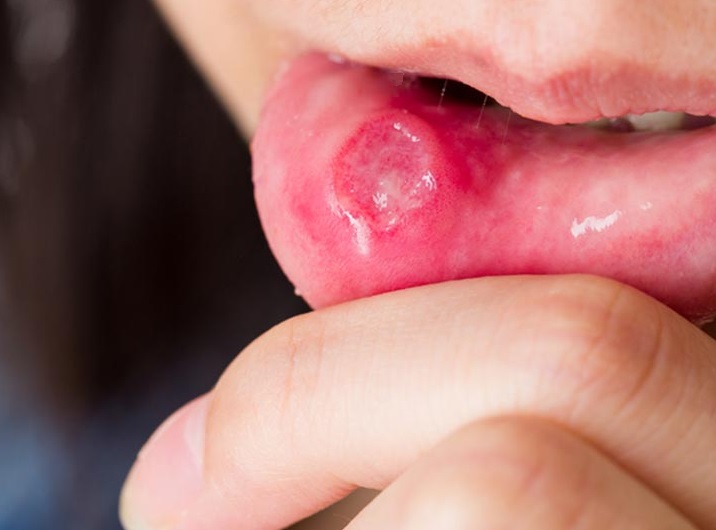
    Personally, this was a symptom that I struggled with, I would always have sores in my mouth and just before diagnosis, they were huge, irritated and bleeding. If you have ever had these sores before, you know just how painful they can become. They can be found on the gums, inside the cheeks or lips, and on the tongue, and can last for up to 7-14 days.

    Research has shown that people with celiac disease are more prone to developing aphthous ulcers (canker sores) then people without the disease. The numbers show that 16% of children and 26% of adults with celiac disease have recurring mouth sores, I can whole heartedly vote yes for this information as if I have been glutened, guaranteed, I will have canker sores develop in my mouth within a day or two.

    As with other dental problems, malnutrition seems to be the culprit as to why people with celiac disease get these sores. Low levels of iron, folate and B12 could cause the sores to develop.

    However, with that being said, there are a lot of reasons why canker sores develop in the mouth such as irritation being one of them. If you are concerned, consult with a doctor or a dentist as to the reasons you are getting them, it may not be that you are an undiagnosed case of celiac disease. Always consult with your healthcare professionals before you start making assumptions.

  5. Dry Mouth
    This is a condition that I have spoken about in another recent blog of mine that you can find here.

    Having a dry mouth can result in tooth decay, the teeth need the saliva to stay healthy, which is why if you are a mouth breather you need to correct the biomechanics of this and become a nose breather. Saliva controls the bacteria that can develop in the mouth, so if it is not readily available, this can sometimes result in catastrophic tooth decay or tooth loss.

    There is a condition called: Sjögren’s syndrome, which is an autoimmune disease that causes dry eyes and mouth because it attacks the glands you need for moisture of the mouth and eyes. Just because you have celiac disease does not mean you will develop Sjögren’s syndrome and vice versa.

    Nonetheless, if you’ve been diagnosed with celiac disease and you suffer from dry mouth or dry eyes, you should talk with your doctor about the possibility of Sjögren’s syndrome. If it turns out you have both, prescription medicines are available that can help stimulate the flow of saliva and protect your teeth.

  6. Inflamed Gums
    This is another personal symptom of my own, every appointment at the dentist I am told that my teeth look fantastic (thank goodness), but my gums are always inflamed without any signs of plaque build up. Just before I was diagnosed with celiac disease my gums would bleed every time I brushed my teeth, I was later told that this can be a sign of malnutrition in the body.

    I have been told my swollen gums could be due to the inflammation caused in my gut from the celiac disease damage that is still trying to heal and therefore could possibly be causing a chronic inflammatory response elsewhere in my body like my gums.

    People with gluten allergies often suffer from periodontal disease and have inflamed, red, swollen, painful gums. A gluten-free diet can relieve the symptoms of gum disease by relieving inflammation.

  7. Cheilosis
    Cheilosis (also called cheilitis) is a painful inflammation and cracking of the corners of the mouth. It sometimes occurs on only one side of the mouth, but usually involves both sides.

    This can occur in someone with celiac disease due to malnutrition and deficiencies in Vitamin B and Folate. It can also be related to megaloblastic anemia which is caused when red blood cells are not produced properly and the bone marrow produces abnormally large red blood cells.

    This is another symptom that I personally have had when I was a kid and sometimes as an adult. This can be very painful and irritating as anything that touches it burns or every time you open your mouth, can rip it more.

  8. TMJ Disorders
    This is a condition that can be occurring due to an inflammatory response in the body from an autoimmune disease, an injury directly to your jaw, or it can be due to bruxism (a condition where you clench and grind your teeth).

    Regardless of the cause, there is more research coming out that connects TMJ pain to celiac disease and the autoimmune response that occurs in the body because of it. More research needs to be done, but there have been connections of celiac disease and muscle and joint pain as well.

  9. Thrush
    This is a candida overgrowth within the body which is a fungus that includes over 20 species of yeast. This overgrowth can be common in people who are immune compressed and indicates a damaged immune system.

    Once again, this is another symptom that I regularly delt with at first. This is also a condition that should have a blog post all to itself as there is a lot of information and research on this.

  10. Plastic
    This is not a symptom as it is something to be aware of. This absolutely blew my mind when I read about this as I use an orthodontic retainer every night. The plastic found in dental equipment or retainers could possibly contain a plastic called: plasticized methacrylate polymer. This is an additive to some plastics and contains gluten.

    Back in 2013 there was a 9 year old girl diagnosed with celiac disease, who continued to be symptomatic even after eating a gluten free diet. Doctors eventually discovered that the orthodontic appliance she was using had the plastic additive mentioned above. After stopping use of the retainer, her symptoms improved and eventually she became symptom free. This just goes to show that it is not just what your consume but also what you use that could possibly have an effect on a celiac’s body. Be sure to check your toothpaste, mouth wash and lip chap for any gluten additives.

If you are concerned of any symptoms you may be experiencing, be sure to always consult your healthcare professional for more information.

References:

https://www.verywellhealth.com/effects-of-celiac-disease-on-dental-health-4115330

https://www.ncbi.nlm.nih.gov/pubmed/21507289

https://glutenfreern.com/dental-issues-and-celiac-disease-ep039/

https://www.ncbi.nlm.nih.gov/pubmed/24137038

https://jcda.ca/article/b39

https://glutenfreern.com/dental-issues-and-celiac-disease-ep039/

https://celiac.org/about-celiac-disease/related-conditions/oral-health/

https://www.colgateprofessional.com/education/patient-education/topics/other-issues/cheilosis

Please Keep This Disclaimer in Mind:

Articles are for educational purposes only and are not intended to diagnose, treat, cure or prevent diseases. We cannot and do not provide medical advice or specific advice on products related to treatments of a disease or illness.

You must not rely on the information on our website as an alternative to medical advice from your doctor or other professional healthcare providers.

You should never delay seeking medical advice, disregard medical advice or discontinue medical treatment because of information on our website.

It is your responsibility to consult with your professional health care providers before starting any diet changes, exercise or supplementation program, and before taking; varying the dosage and / or ceasing to take any medication.

We do not collect any personal information or store cookies.  You can turn off cookies on your web browsers.

Dry Eyes and Celiac Disease

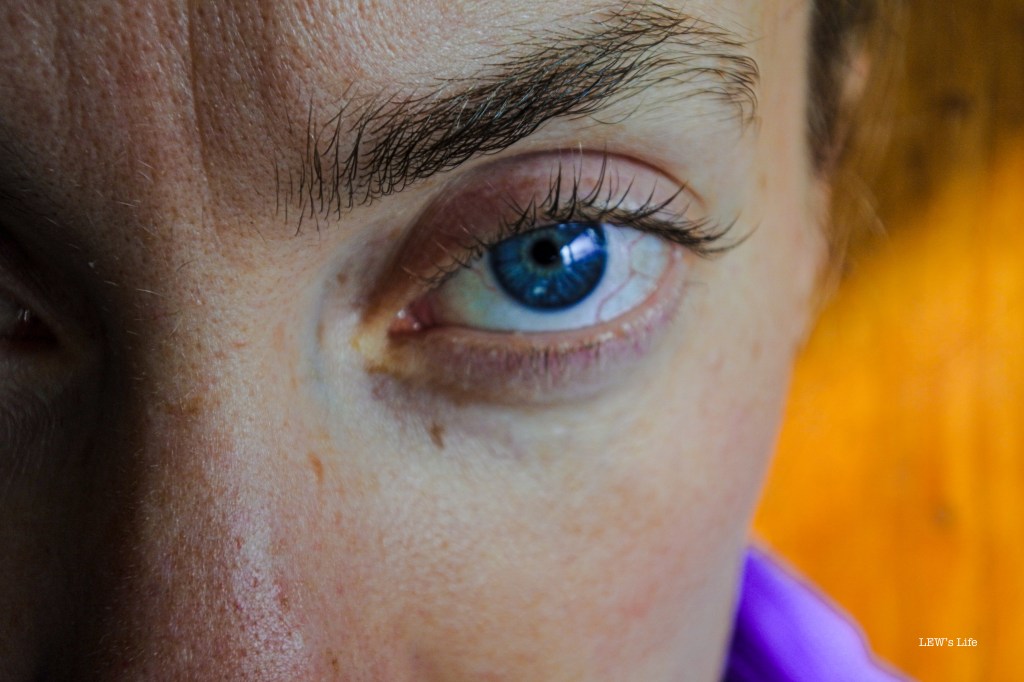
For the last few months, my left eye has been very dry. It burns, itches and is very irritated, I have had this on and off for years but it has just become more frequent in the last few months. I went to see my optometrist and he mentioned my eyes look perfectly healthy and that it could be that I moved from a humid climate to a dry climate. I decided to do a bit more digging because the drops he gave me did not correct the issue completely and it only happens some days and not others. Because I have an autoimmune disease (celiac disease) I tend to see if any of the ongoing symptoms I have could be related to this condition. And sure enough, dry eyes can occur with someone who has celiac disease.

The Facts:

It is estimated that half of celiac patients not only show digestive issues but also other symptoms throughout the body. They vary depending on age at onset, gender, the strength of the immune system, and the genetic predisposition of the individual. There is a heap of medical evidence that the condition may not only effect the gastrointestinal tract (GI) but also affect the reproductive system, central nervous system, brain, and skin.

Can Celiac Disease affect vision?

In short, yes. According to recent studies, there is a strong connection between celiac disease and eye health. “The ophthalmic manifestations are within the extra-intestinal manifestations, and can be divided into autoimmune disorders and absorptive disabilities. The manifestations related to malnutrion are correlated to the low levels of vitamin A, vitamin D and calcium. It could cause retinopathy, cataract, dry eye and pseudotumor cerebri,” from the article, ‘Ophthalmologic manifestations of celiac disease.’

Celiac Disease and Sjögren’s Syndrome

Sjögren’s syndrome is one of several autoimmune disorders that can go hand-in-hand with celiac disease. Whereas celiac disease primarily affects the small intestine, Sjögren’s syndrome mostly affects lacrimal and salivary glands. These are glands responsible for producing tears and saliva in your eyes and mouth respectively. 

Relating this to myself, I ate a muffin one weekend when I was away on a course. It was gluten free but soon realized it most likely was cross contaminated. Shortly after eating that muffin I began to get all the symptoms of celiac disease and the worst one that weekend was brain fog. A new symptom that occurred that weekend was a very dry mouth and really dry eyes. This of course started to scare me because I have never experienced this before and no matter how much water I drank I could not help my dry mouth. My eyes were burning that weekend, and even with keeping them closed for extended periods at a time, they were very dry. This thankfully went away after a few days.

According to the National Institute of Neurological Disorders, about 1-4 million North Americans have Sjögren’s syndrome, 90% are women over 40 years of age. The body of a person with Sjögren’s syndrome, cannot produce adequate moisture, which can cause havoc on your eyes. This condition is said to be a secondary autoimmune disease which is triggered by celiac disease. In worst cases, it can lead to extensive eye damage and even vision loss.

The symptoms of Sjögren’s syndrome can vary from person to person, however the most common symptoms is a dry mouth and eyes. Other symptoms that can occur are: joint pain, rashes, fatigue, and sometimes vaginal dryness. The eyes not only become dry but can also have a burning sensation.

Dry eye syndrome and Celiac Disease

Dry Eye Syndrome is a condition where the lacrimal glands cannot produce enough tears or the eyes are not able to maintain a normal tear layer to cover the surface. This can be a problem because the eyes cannot get rid of germs, dust, and other irritants that may come their way. This can cause a dry eye, burning sensation or feeling as though there is something lodged in your eyes. There can also be an array of other symptoms such as redness, pain, burning and stinging.

Some medical studies have shown that celiac disease may cause dry eye due to the inability to absorb nutrients from the small bowel. One important nutrient is vitamin A, this is essential for eye health. Decreased amounts of vitamin A can cause a drastic change to squamous cells (the outermost layer of the skin) and a loss of goblet cells (found in the respiratory and intestinal tracts, which secretes the main component of mucus). Both of these cells are important for the overall function of the eyes epithelium. Over time, acute deficiency of vitamin A can lead to dry eye syndrome and a list of other vision impairments such as night blindness.

In conclusion, celiac disease does not just affect the gastrointestinal tract, it can have an array of other symptoms that can affect all other systems within the body. Other autoimmune conditions can occur as a result of celiac disease or vice versa, such as Sjögren’s syndrome. I do not believe that I personally have Sjögren’s syndrome because these symptoms only occur when I have accidentally eaten gluten or something that was cross contaminated with gluten. It seems that once I begin to heal my gut, symptoms of dry eyes and mouth seems to go away. However, my TTG levels (blood test for celiac disease) are currently still higher then they should be, so malabsorption of vitamin A along with other essential vitamins can be causing ongoing symptoms. Regardless of what it is that you are experiencing, you should always consult a healthcare professional to reach a diagnosis or make a plan on how to get you feeling your best.

References:

https://www.ncbi.nlm.nih.gov/pmc/articles/PMC4768497/

https://www.imaware.health/blog/the-connection-between-celiac-and-eye-health

Please Keep This Disclaimer in Mind:

Articles are for educational purposes only and are not intended to diagnose, treat, cure or prevent diseases. We cannot and do not provide medical advice or specific advice on products related to treatments of a disease or illness.

You must not rely on the information on our website as an alternative to medical advice from your doctor or other professional healthcare providers.

You should never delay seeking medical advice, disregard medical advice or discontinue medical treatment because of information on our website.

It is your responsibility to consult with your professional health care providers before starting any diet changes, exercise or supplementation program, and before taking; varying the dosage and / or ceasing to take any medication.

We do not collect any personal information or store cookies.  You can turn off cookies on your web browsers.

What Taking Too Many Vitamins Did To Me

We all know that having vitamins and minerals in our diets daily is essential for living a healthy life. But did you know that you can take too many vitamins to a point of toxicity in your body? I learned this at school but never thought I would ever reach those levels. I mean they are vitamins, the essential ingredient to everyday life, they can’t hurt me right? I learned this the hard way.

To give you a bit of a background, I have celiac disease and have known for just over 3 years. The biggest thing with celiac disease is it can cause malnutrition in the body due to the decreased absorption rate in the small intestine. However, once your small intestine starts to heal on a gluten free diet, you start to be able to absorb nutrients at a regular rate. I did not keep this in mind when I went through my most recent diet venture. I get my blood tested every three months to check TTG levels (celiac test) and iron levels. I have not been able to decrease my TTG levels and my iron keeps fluctuating. My most recent test came back, and yet again, my TTG was up a level and my iron had dropped significantly. I have been keeping an eye on this for the past two years and the TTG is always high (when it should be low) and the iron is always going up or down but never out of the iron deficiency range. Point of my story, this is what drove me to do what I have now done.

When I was first diagnosed I went on a paleo based diet called the hypoallergenic diet, where you cut out processed foods, dairy, certain meats and refined sugars along with caffeine, we temporarily cut out grains as well considering my condition. You can however eat certain fish and meat, fruit, vegetables, some starches, nuts and seeds and natural sugars. Along with this diet I took a nutrition powder to help boost my vitamin and mineral levels, I only took one scoop of it a day for a month. I tell you, I felt better then I have in years while on this diet. It all started going downhill when I started eating processed foods and going out to eat again. I had the brilliant idea, let’s do this diet again and fix my blood levels once and for all.

I’m not sure if it was because I was so motivated to feel better or that I had the thought that I could not be taking too many vitamins because I still have active celiac disease, but I made a big mistake that I thankfully caught quickly.

I started the diet just over a week ago, and I started to feel good, then I got a lot worse. I started to have symptoms of being tired, bloated, gas, sharp abdominal pains, hair felt brittle and was falling out some, I became constipated, was not sleeping well, and just in the last day and a half (brace yourself, this is a bit gross) I have been having mushy, yellowish, foul smelling stool that sticks to the toilet bowl. Now I have seen this before because the same thing can happen with someone who has celiac disease, but I know I have not eaten gluten lately so this is what started to make me question the last week. Keeping in mind the change in diet could be a factor as well, but the last day and a half I have not taken any supplements (other then a digestive enzyme before meals and a probiotic at night) and continued with the same diet and my digestion has improved, no sharp pains or bloating and bowel movements are becoming normal.

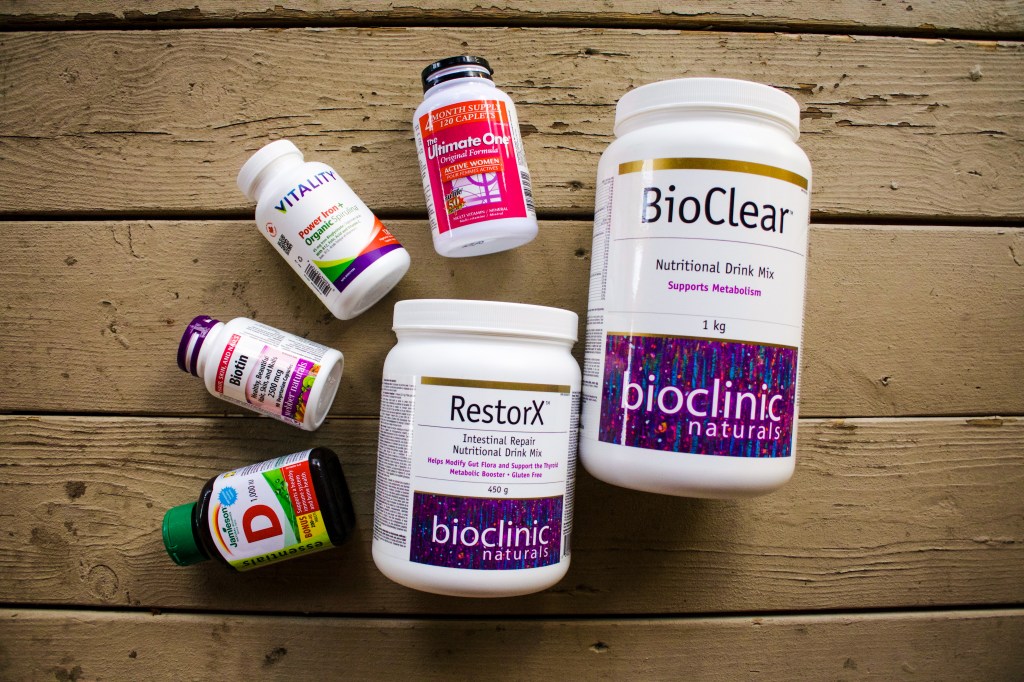
Over the last 9 days, I was taking the nutritional powder supplement twice a day, a multivitamin, an iron supplement, vitamin D, and biotin…now that I look back at this; past Lauren; you were taking way too many vitamins! I guess I was just thinking, “it can’t hurt right?”

All of the products in this photo are fantastic and I will continue to take them when I need too, but only ONE AT A TIME and once a day.

Recommended Dietary Allowance / Adequate Intake / Tolerable Upper Intake Level: What does this all mean?

The RDA (Recommended Dietary Allowance) and the AI (Adequate Intake) are the amounts of vitamins and minerals you need to keep healthy and nourished. They’re tailored to specific ages of women and men.

The UL (Tolerable Upper Intake Level) is the maximum amount of daily vitamins and minerals that you can safely take without risk of an overdose or serious side effects.

How Much Is Too Much?

Take a look at the UL (tolerable upper intake level), and do not exceed it. “There are some vitamins and minerals that you can safely take a dose much higher then the RDA or DV without coming close to the UL” WebMD. “With some vitamins and minerals, the upper limit is pretty close to the RDA. So it’s easy to get too much. For example, a man who takes just over three times the RDA of vitamin A would get more than the upper limit. High doses of vitamin A — and other fat-soluble vitamins like E and K — can build up in the body and become toxic. Other risky supplements include the minerals iron and selenium” WebMD. Personally, I would not exceed the RDA and not go near the UL to play it safe.

For an example of the possible symptoms, here is a quote from one of WebMD’s articles: “Too much vitamin C or zinc could cause nausea, diarrhea, and stomach cramps. Too much selenium could lead to hair loss, gastrointestinal upset, fatigue, and mild nerve damage.”

An Important Message: Supplements are designed to be an addition to your everyday diet. You should be getting as many nutrients from the food you eat as you can so you do not have to take a supplement. Supplements should only be an addition to your everyday routine if you are not getting certain vitamins and minerals naturally from the food you eat. You should eat a well balanced diet and only take supplements to fill the nutritional gaps. Following a whole food diet will be sufficient enough for most people without having to resort to an expensive supplement that you will essentially be peeing away. However, in some cases supplements are necessary, for example, malnutrition from celiac disease or iron deficiency. But even in those cases you should just take them to a point that the nutrients you were missing are now level. After they become level, stop taking the supplement and continue getting it from it’s natural food sources. The end goal is to always get you off of supplements for the long-term, or until they are needed again.

So, just how many vitamins was I taking?

First things first, there are water-soluble vitamins (they dissolve in water) and fat-soluble vitamins (do not dissolve in water). Water-soluble vitamins are readily excreted from the body, while fat-soluble vitamins can be stored in tissues. Fat-soluble vitamins are more likely to cause toxicity, although water-soluble vitamins can do so as well.

Fat-SolubleWhat I consumedRDAUL
Vitamin A1355 mcg700 mcg RAE3000 mcg
Vitamin D50-75 mcg15 mcg100 mcg
Vitamin E117.3 MG15 MG1000 MG
Vitamin K090 mcgN/A

The following water-soluble vitamins have set ULs, as they can cause adverse side effects when taken in high doses:

Water-SolubleWhat I consumedRDAUL
Vitamin C625 MG75 MG2000 MG
Vitamin B3 (niacin)38 MG14 MG35 MG
Vitamin B6 (pyridoxine)45 MG1.3 MG100 MG
Vitamin B9 (folate)2550 mcg400 mcg1000 mcg
MineralWhat I consumedRDAUL
Selenium270 mcg55 mcg400 mcg
Zinc50 MG8 MG40 MG
Iron63 MG18 MG45 MG

The calculations above are some of the vitamins and minerals that can potentially cause damage in the body, I was taking everyday for 9 days. I went just a bit over or WAY over the RDA and just a few I went over the UL. After researching the side effects of taking too many of just these vitamins, it explains why I was getting the symptoms I was the last few days. This is not even including the vitamins and minerals I was getting from the food I was eating. Moral of the story, do not take over the RDA of vitamins and minerals in a day (again, unless your doctor has told you so for deficiency reasons).

What have I learned?

  1. Your multivitamin may have more then the RDA of a vitamin or a mineral within it. Which means, if it is a water-soluble vitamin, you are just peeing the unneeded amount out. They can potentially be a waste of money, unless you are deficient in that vitamin or mineral, your body will soak up all it needs in that case.
  2. Harmful symptoms can occur if you take too many vitamins and minerals everyday, and it may hit you by about day 3 or 4, and just get worse as you continue to take them.
  3. Unless you have a deficiency in a vitamin or a mineral, or have an underlying condition that is preventing you from absorbing the correct nutrients from your diet (like say celiac disease), taking a multivitamin everyday may be a waste of money as most of the nutrients and your money will be going down the toilet.

References:

https://www.webmd.com/diet/guide/effects-of-taking-too-many-vitamins#1

https://ods.od.nih.gov/factsheets/Selenium-Consumer/

https://www.healthline.com/nutrition/can-you-overdose-on-vitamins#safety

https://www.healthline.com/nutrition/fat-soluble-vitamins

https://ods.od.nih.gov/factsheets/Zinc-Consumer/

https://ods.od.nih.gov/factsheets/Selenium-Consumer/

https://ods.od.nih.gov/factsheets/VitaminD-HealthProfessional/

https://ods.od.nih.gov/factsheets/VitaminA-Consumer/

https://ods.od.nih.gov/factsheets/VitaminE-HealthProfessional/

https://ods.od.nih.gov/factsheets/Niacin-HealthProfessional/

https://ods.od.nih.gov/factsheets/VitaminB6-HealthProfessional/

https://ods.od.nih.gov/factsheets/Folate-HealthProfessional/

https://ods.od.nih.gov/factsheets/Selenium-Consumer/

https://ods.od.nih.gov/factsheets/Zinc-HealthProfessional/

https://ods.od.nih.gov/factsheets/Iron-HealthProfessional/

Please Keep This Disclaimer in Mind:

Articles are for educational purposes only and are not intended to diagnose, treat, cure or prevent diseases. We cannot and do not provide medical advice or specific advice on products related to treatments of a disease or illness.

You must not rely on the information on our website as an alternative to medical advice from your doctor or other professional healthcare providers.

You should never delay seeking medical advice, disregard medical advice or discontinue medical treatment because of information on our website.

It is your responsibility to consult with your professional health care providers before starting any diet changes, exercise or supplementation program, and before taking; varying the dosage and / or ceasing to take any medication.

We do not collect any personal information or store cookies.  You can turn off cookies on your web browsers.

Naan Bread: Gluten free, dairy free and made in three main ingredients

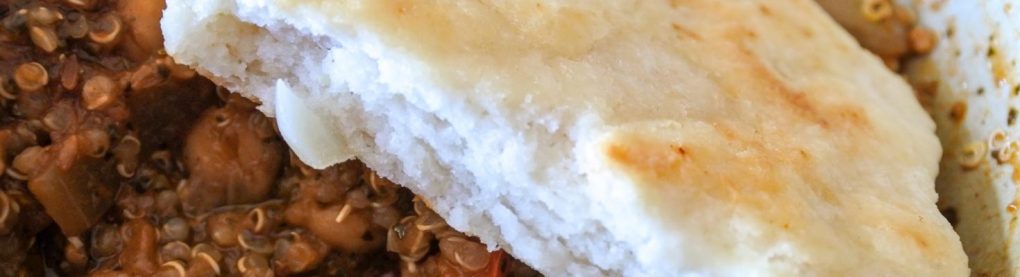
Being a Celiac and eating gluten free has it’s perks but also sometimes certain foods can be missed. Eating curry these days makes me miss having a warm naan bread to enjoy it with. You are all in luck! I have figured out how to make naan bread in just 3 main ingredients and less then 20 minutes of preparation and cooking.

Guys this is actually so easy! Give it a try, all you need is:

Ingredients:

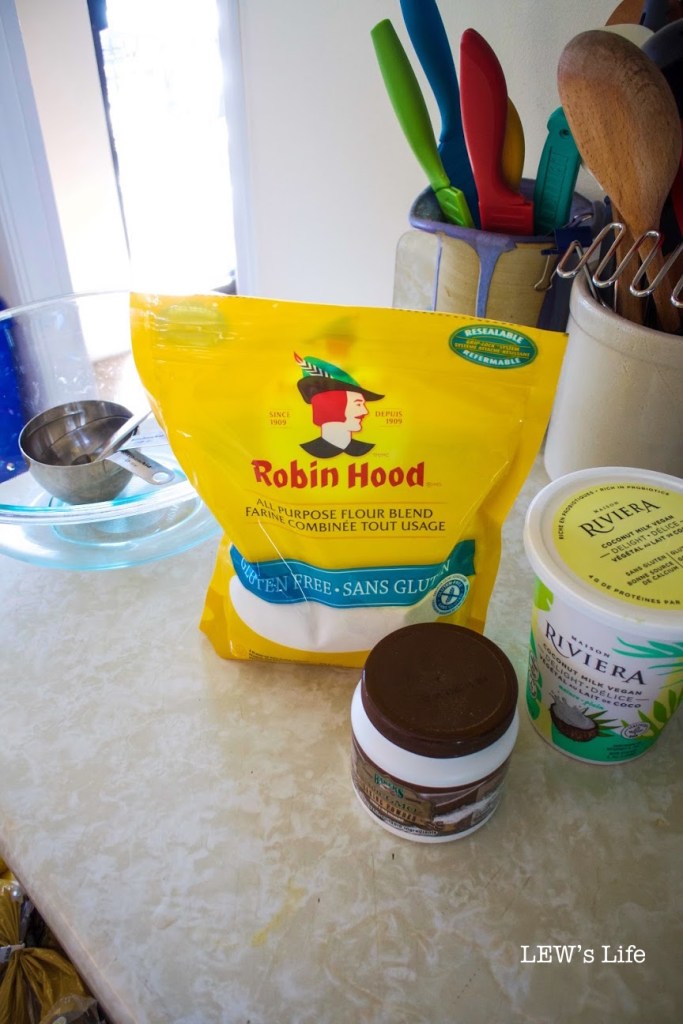
1 cup Red Robin gluten free flour mix, or another pre-mixed gluten free flour I have also used Bob’s Red Mill as well and it turned out the same

1 cup dairy free yogurt, or you can use regular yogurt if you are not dairy free

1tsp baking powder

To add flavour as an option you can also add:

2 chopped up garlic cloves or 1 tsp garlic powder

1 tsp onion powder

1 tsp sesame seeds

This gave it an amazing flavour and will make your kitchen smell so good!

Directions:

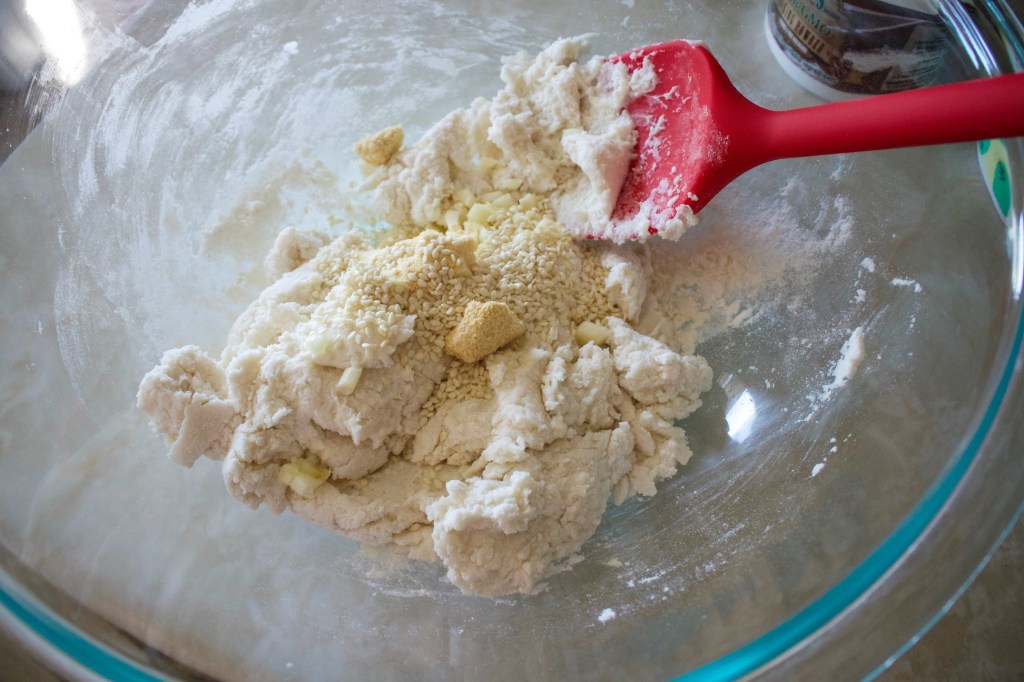
  1. Mix all the dry ingredients, gluten free flour mix and baking powder.
  2. Then add the yogurt and mix well.
  3. If you are going to add flavour add it in now.
  4. Roll the dough into 4 individual balls – you may have to add flour or water to your hands as the dough is a bit sticky.
  5. Then flatten out the balls until they are 1/4 of an inch thick.

    In a pan on medium heat, add:
  6. 1 tbsp of olive oil or any oil of choice – I would go with a neutral oil to not over take the taste of the bread.
  7. Then add the bread to the pan and let it cook for 5 minutes, flip them over and cook for another 5 minutes on medium heat in the pan.

Plate up and enjoy with your curry, chilli or any other great recipe you have on hand.

Please Keep This Disclaimer in Mind:

Articles are for educational purposes only and are not intended to diagnose, treat, cure or prevent diseases. We cannot and do not provide medical advice or specific advice on products related to treatments of a disease or illness.

You must not rely on the information on our website as an alternative to medical advice from your doctor or other professional healthcare providers.

You should never delay seeking medical advice, disregard medical advice or discontinue medical treatment because of information on our website.

It is your responsibility to consult with your professional health care providers before starting any diet changes, exercise or supplementation program, and before taking; varying the dosage and / or ceasing to take any medication.

We do not collect any personal information or store cookies.  You can turn off cookies on your web browsers.


Decreased Sleep and Celiac Disease

Since my diagnosis of celiac disease just over three years ago, lack of sleep has been a symptom that has not improved, and quite frankly, I’m tired of it. My alarm went off at 5:45 am this morning and I feel back to sleep and woke up at 7:11 am, how ’convenient’…get it…because of the 7/11 convenience stores…I digress.

I went from being a morning bird who could get up with the sun, most days, at 5-6 am and be able to get on with my day. Truthfully, some days was an absolute struggle but not as bad as it is now. For the last year, I have been setting my alarm at 5:30 am and not being able to get out of bed until 7 or 8 am and this is with going to bed at 9 or 10 pm. I have to peel myself out of bed to get up at those times. One reason this can be a struggle right now, is the quality of sleep I am getting at night, meaning, what quality of sleep? I can fall asleep pretty quickly, however, I wake up 4-6 times a night where I will open my eyes and fall right back to sleep. There have been one or two nights in the last three years that I have woken up wide awake and unable to fall back to sleep for hours.

This disrupted sleep has impacted my energy, focus and motivation throughout the day. Why am I tell you all of this? Because there was one month that I ate a hypoallergenic diet where I ate only whole foods and nothing processed. I kid you not, after a few weeks on this diet, I slept like a baby – right through the night! Then I started eating out at restaurants and eating processed foods again, and my symptoms of celiac disease all came right back. This had me thinking, can the health of your gut have an effect on the quality of your sleep? Sure enough, it does.

Gluten consumption, regardless if it is intentional or an accidental exposure through cross contamination, could possibly cause problems with your sleep if you have celiac disease or non-celiac gluten sensitivity. Keep in mind, not a lot of research has been done in this field of celiac disease, however, the little research that has been done is leaning towards a confirmation of this fact.

Many people who cannot handle gluten suffer from fatigue – this is one of the most common symptoms in both celiac disease and non-celiac gluten sensitivity. Getting to sleep and staying asleep seem to be very common problems before diagnosis and even after diagnosis while following a gluten free diet.

Is it malnutrition?

Due to the malnutrition that occurs with people who have celiac disease from the intestinal damage caused by gluten, it is a very educated guess that malnutrition may be the culprit to sleep disturbances. However, a 2010 study concluded that the sleep problems do not seem to be stemming from malnutrition as people with celiac disease who have been following a gluten free diet for 6 years continued to have sleeping problems. This also would not make sense for the sleep disruptions experience by the gluten sensitive as consuming gluten does not cause intestinal damage in those individuals.

So if it is not malnutrition, what could be the cause of decreased sleep?

Gluten ingestion has not been proven to be the culprit to sleep disturbances in people with celiac disease or gluten sensitivities. Dr. Rodney Ford, a New Zealand pediatrician, gastroenterologist,  allergist, and author of “The Gluten Syndrome,” hypothesizes that gluten in the diet of someone with either of these conditions affects their brain and other neurological tissue directly causing these symptoms, however, there is no research confirming these accusations.

Personally for myself and I know for many other celiac’s, 6-12 hours after an accidental gluten exposure (ie. being glutened), and having symptoms specific to celiac disease, my sleep disturbances are heightened and about a thousand times worse. 

Could it be other symptoms of celiac disease disturbing your good night sleep?

Symptoms such as gas, bloating, diarrhea and constipation could be disturbing your sleep, but if you are not experiencing any of these symptoms, consider the following other possible symptoms.

Acid reflux and heartburn: This can happen during the day at at night, but stomach acid coming up your esophagus into your mouth or even lungs is not great anytime of day. People who snore or have obstructive sleep apnea are at special risk for this.

Anemia/iron deficiency: This is a personal symptom of mine that I have had since high school and has yet to improve. This condition is famously related to restless leg syndrome, this is a condition that causes a very uncomfortable sensation into the legs usually at moments of rest but can also happen during the day. This may disrupt sleep by causing the individual to have to get up walk around and stretch their legs to decrease the symptoms before trying to fall back to sleep.

Anxiety and depression: Having medical issues of any kind can often lead to problems with mental health. When this happens, one common outcome is a negative influence on sleep quality. Unfortunately, poor sleep tends to exacerbate anxiety and depression. This makes it hard for the person with celiac (or any other chronic illness) to enjoy a good quality of life.

Fatigue: If a person is fatigued, you would think they would be able to sleep through the night. However, this is a common symptom among all individuals with an autoimmune disease. The problem with this symptom is the constant napping during the day that may be required. Napping can disrupt your natural circadian rhythm and can cause insomnia.

Headaches and joint pain: Pain of any kind can be one of sleep’s biggest enemies. Headaches and joint pain can disrupt sleep or can cause an individual to struggle falling asleep. To add, the anti-inflammatory drugs one may take to decrease symptoms, could interfere with sleep.

So the real question is, what can we do to improve our quality of sleep?

As mentioned above, when I went a month without eating any processed foods I felt like Wonder Woman. I had no symptoms of celiac disease, I was sleeping through the night and I felt better then I have my whole life. Did you know that there are very small amounts of gluten found in gluten free labeled foods? It has been said that the small amounts of gluten found in these foods may not affect all celiacs, but may affect some. If you are anything like I am, you may need to drop most, if not all processed foods from your diet and stick to whole foods to see a difference in your sleep and other celiac symptoms. After two and a half years after first following a whole food diet, I am finally cluing in that this is the key for myself personally to get a good night sleep and feeling like Wonder Womqn again. I will be venturing into this diet starting this week, if all goes well, I will make another blog post on my progress!

Another way to improve your quality of sleep is to follow a good night time routine of ditching the bedroom TV, no artificial lighting before bed, and avoiding unnecessary naps.

References:

https://www.verywellhealth.com/gluten-and-sleep-562316

Jordá FC, López vivancos J. Fatigue as a determinant of health in patients with celiac disease. J Clin Gastroenterol. 2010;44(6):423-7. doi:10.1097/MCG.0b013e3181c41d12

Zingone F, Siniscalchi M, Capone P, et al. The quality of sleep in patients with coeliac disease. Aliment Pharmacol Ther. 2010;32(8):1031-6. doi:10.1111/j.1365-2036.2010.04432.x

Ford RP. The gluten syndrome: a neurological disease. Med Hypotheses. 2009;73(3):438-40. doi:10.1016/j.mehy.2009.03.037

https://onlinelibrary.wiley.com/doi/full/10.1111/j.1365-2036.2010.04432.x

https://www.ncbi.nlm.nih.gov/m/pubmed/20937049/

Please Keep This Disclaimer in Mind:

Articles are for educational purposes only and are not intended to diagnose, treat, cure or prevent diseases. We cannot and do not provide medical advice or specific advice on products related to treatments of a disease or illness.

You must not rely on the information on our website as an alternative to medical advice from your doctor or other professional healthcare providers.

You should never delay seeking medical advice, disregard medical advice or discontinue medical treatment because of information on our website.

It is your responsibility to consult with your professional health care providers before starting any diet changes, exercise or supplementation program, and before taking; varying the dosage and / or ceasing to take any medication.

We do not collect any personal information or store cookies.  You can turn off cookies on your web browsers.


Where To Eat Gluten Free In Melbourne

Melbourne has a very large hipster vibe with lots of little shops, boutiques and restaurants all over the inner city. Not only is Melbourne known for it’s wide range of graffiti and wall art but it is also very well known for it’s food. There is a huge variety of many different types of restaurants that you can choose from, ranging anywhere from Mexican to Greek, fancy bougie pubs, and bars that have a dark atmosphere but extremely fun rock and roll vibe. Depending on the experience you are feeling, Melbourne has it all.

If you have celiac disease or you are gluten intolerant, there are many options for gluten free within the city. I have to say that I am very impressed with everywhere I have been in Australia thus far for gluten free food. This is the first time I have been to restaurants and when I say I have celiac disease they understand that it is not just the ingredients of the food we are eating but it is also where and how it is prepared. Most restaurants will tell you honestly if there is a chance of cross contamination or if they have a separate cooking space, toaster, fryer, or oven. It feels like everywhere in Australia, they take celiac disease, food intolerances or allergies very seriously. However, keep in mind that regardless it is very important to speak to the chef, manager or your server about the details of your dietary requirements to be sure you will not become sick.

I wish I could have spent more time in Melbourne but here is a list of all the restaurants I ate as someone with celiac disease. Not one of the restaurants I have mentioned made me sick or caused a reaction.

1) Stalactites

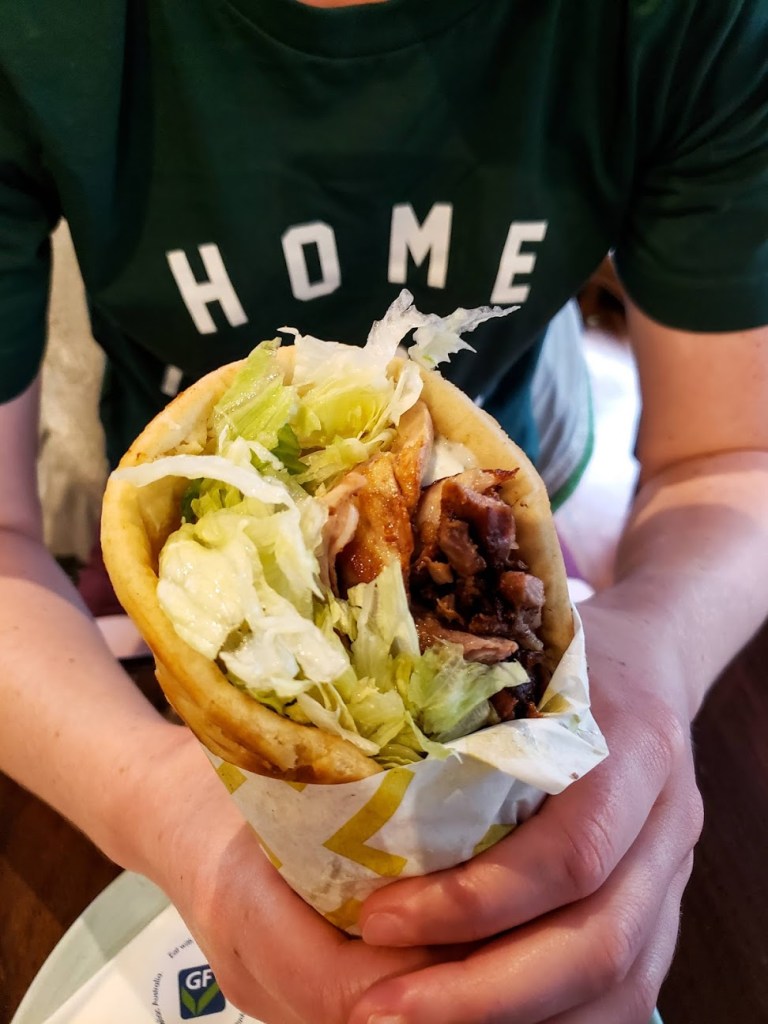
This Greek restaurant, located downtown Melbourne, is highly recommended for those with celiac disease as it is accredited by the Australian Coeliac Association. This is the first time I have been to a restaurant that has the stamp of approval from the country’s coeliac association. There is a separate workspace for the chef’s in the kitchen to avoid cross contamination of gluten into any food, this includes chopping surfaces, oven’s, and anywhere to heat up the kebab’s and fryers for the fries/chips.

Mixed Kebab

Not only is it safe for a celiac to eat at, but the food is out of this world fantastic. This was the first time in over 3 years since my diagnosis that I have been able to safely eat a kebab. The food here is so good that I went three days in a row. The first 2 days I had the mixed souvlaki (kebab) and the final day I had the lamb fillet kebab. I believe there are vegetarian options as well along with other amazingly delicious looking gluten free dishes. However, I would highly recommend the kebab as you will not believe the pita bread is gluten free, so good that I want to figure out the recipe so I can make it at home.

Coeliac Certified Sticker

Each wrap I ordered came with a napkin that had the coeliac association sticker on it. This will both ease your mind that the wraps did not get mixed up, you know the chef knew that it had to be appropriate for a celiac with no cross contamination, but also, how cool is that?!

The staff is very friendly and knowledgeable about any dietary requirements you may have. The environment is welcoming and bright with a sit down and take out option, the food was also served pretty darn quick as well.

As I mentioned, I ate here 3 days in a row, all with kebab’s, and had no reactions to gluten at all. I would highly recommend this restaurant if you are in the area and looking for a celiac safe restaurant.

Location: 177/183 Lonsdale St, Melbourne VIC 3000, Australia

Phone Number:+61 3 9663 3316

Menu:

2) Roule Galette

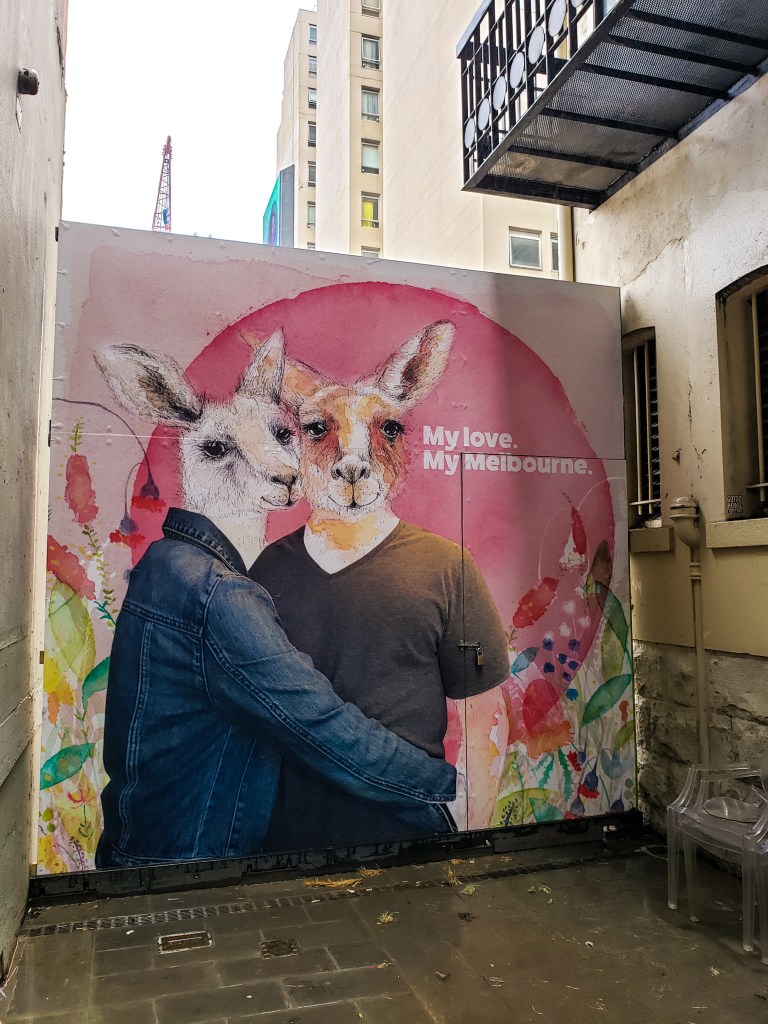
This is a very sweet little French cafe located downtown Melbourne very close to the Flinders Street Railway Station and the City Library. This adorable cafe is located within the beautiful Flinders lane, mixed in with other boutiques, shops and restaurants. You will know you are down the right street when you see a pink painted mural on the back wall of the street of two kangaroos dressed up.

Chicken Avocado Crêpe

This restaurant has gluten free options suitable for a celiac along with vegan and vegetarian. They informed me that they have a separate gluten free crêpe maker to avoid cross contamination. The gluten free crêpes are fantastically delicious and have options of being both savoury and sweet. They were so good that I bought both a savoury and sweet crêpe in the same visit.

La Belle Normande Crêpe

I began with the avocado chicken crêpe, along with a French earl grey tea with almond milk and some of the best honey I have ever had. The crêpe is massive as it is the size of a standard dinner plate. The chicken was perfectly cooked, and was a perfect match with the avocado, tomato, emmental cheese, home- made basil pesto. Directly after this we ordered the La Belle Normande: Cinnamon poached apple, ice cream (can be vegan), homemade whipped cream, homemade salted caramel, my mouth was watering for hours after eating this.

The staff here are absolutely lovely, knowledgeable about dietary requirements and have some of the best French accents I have heard. The environment of the cafe will make you feel as though you have transported to France, the music is enjoyable and for over flow reasons, they have a small cafe on both sides of the cobblestone street. They offer breakfast, lunch, dinner and take away. I would highly recommend visiting this adorable French getaway for some of the best crêpes you will ever eat.

Location: Scott Alley, 237/241 Flinders Ln, Melbourne VIC 3000, Australia

Phone Number:+61 3 9639 0307

Menu:

3) Bodega Underground

If you like Mexican food, this is the place for you. Everything in this restaurant is gluten free so there is no need for anyone with Celiac Disease to be nervous about cross contamination.

Totopos With Guacamole and Elote

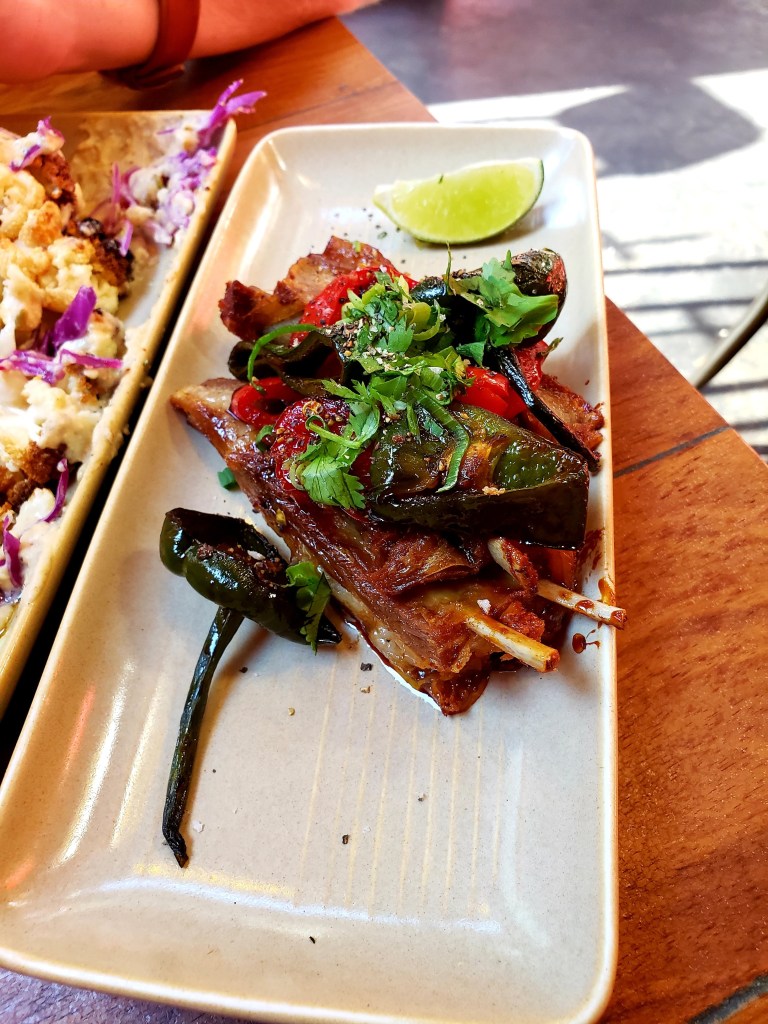
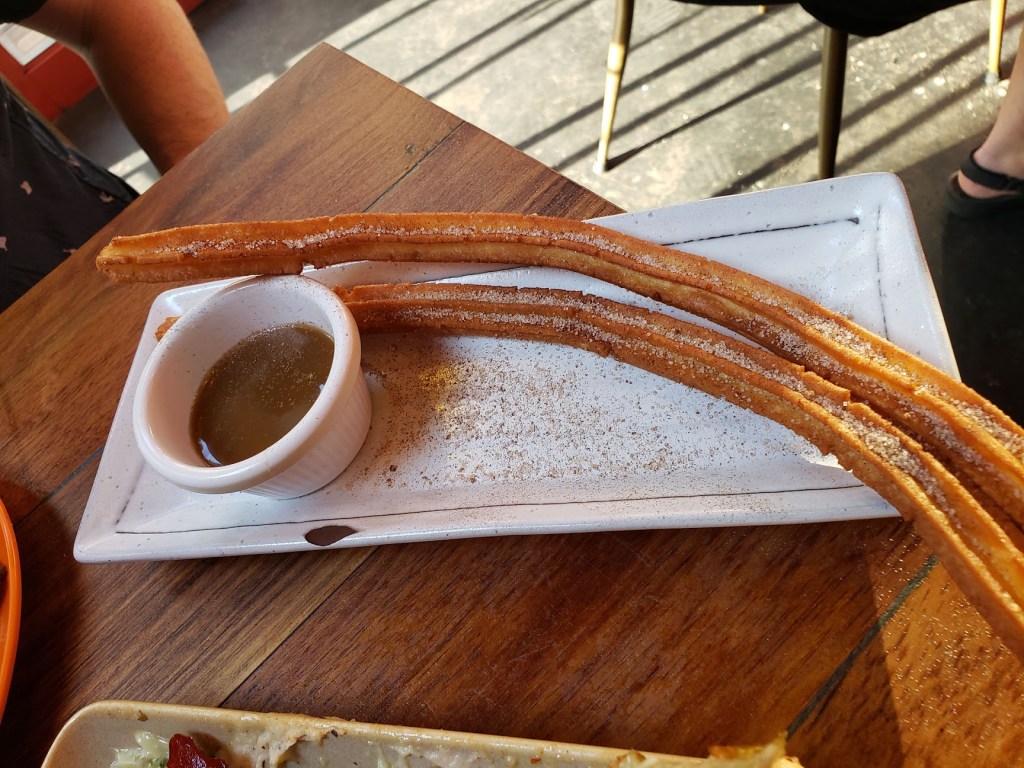
We went with the ‘feed me’ option on the menu, and as fantastically good as this option was, I would not suggest it unless you are starving…it was a lot of food, hence the name. With this option you get the totopos with guacamole, papas, elote, charred cauliflower, lamb riblets, two taco servings: carnitas, tacos de frijoles and end with the churros con dulce de leche. All of this food will cost you $50 ASD per person, and is to serve two people. This is a great option at this restaurant to try almost everything on the menu.

Every single dish we ate at this restaurant, I would go back for. The nachos are perfectly crispy and a great pair with their authentic guacamole, the tacos are a perfect size and just the right amount of filling along with being jam packed with flavour. The street corn was out of this world, I never would have thought to put parmesan cheese on BBQ corn on the cob. The papas were soft and delicious potato bites, paired perfectly with their chipotle in adobo sauce. The charred cauliflower was a meal on it’s own and I would 100% go back for this one if you are a vegetarian, it is a perfectly cooked head of cauliflower covered with a delicious cheese sauce. The lamb riblets fall off the bone as you pick them up and melt in your mouth. Finally, ending with gluten free churros…I never thought I would see the day that I could eat a churros again, this was a dream come true for a celiac. They were crunchy, covered in sugar and cinnamon and the dulce de leche sauce, I wanted to drink out of the bowl.

The environment of this great restaurant is fantastic along with the staff as well, I would highly recommend this restaurant to anyone looking for a gluten free option for Mexican food in downtown Melbourne.

Location: 55 Little Bourke St, Melbourne VIC 3000, Australia

Phone Number:+61 3 9650 9979

Menu:

If you find yourself by Smith Street, seek out CIBI and Saba’s Ethiopian restaurant as they are both just a block or two away.

4) CIBI

This is a very sweet and down to earth restaurant serving Japanese cuisine. It is not just a restaurant, there is a beautiful plant store and Japanese pottery, knives and other special treasures you may not be able to find anywhere else. I truly wish I had more room in my travel bag to get some items back home.

The staff is lovely, and at first they were not too sure about cross contamination or food being 100% gluten free for a Celiac, however the chef pulled through and can I tell you how much I appreciated this! The food was very healthy, light but filling and exactly what I wanted to eat that day.

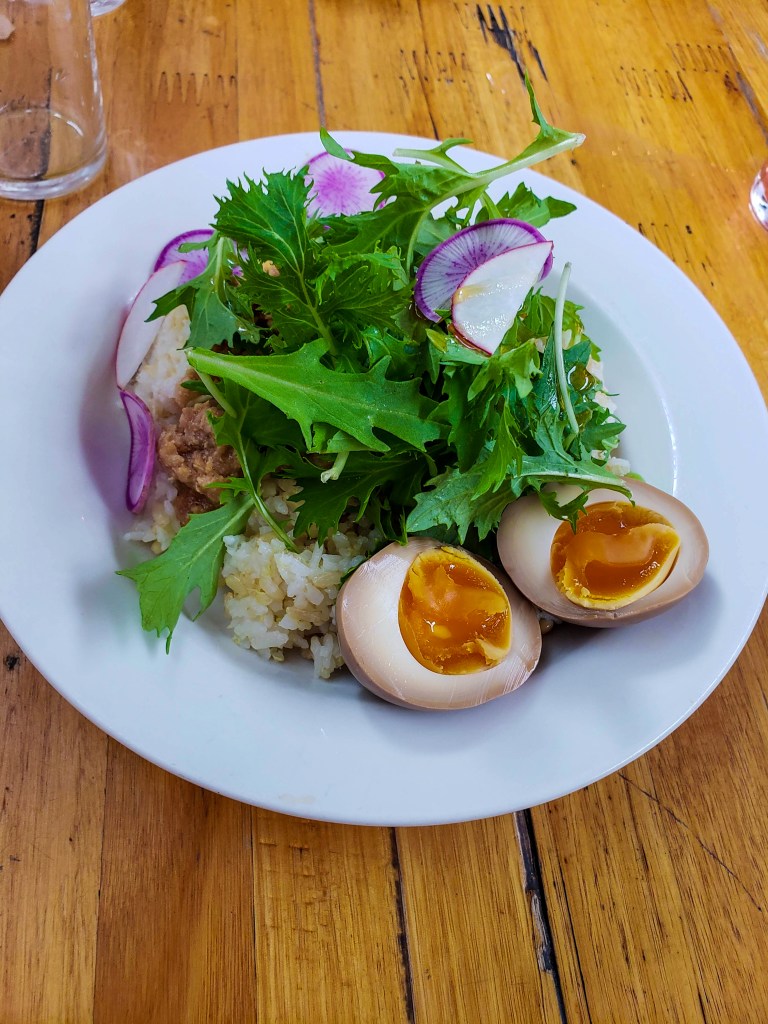
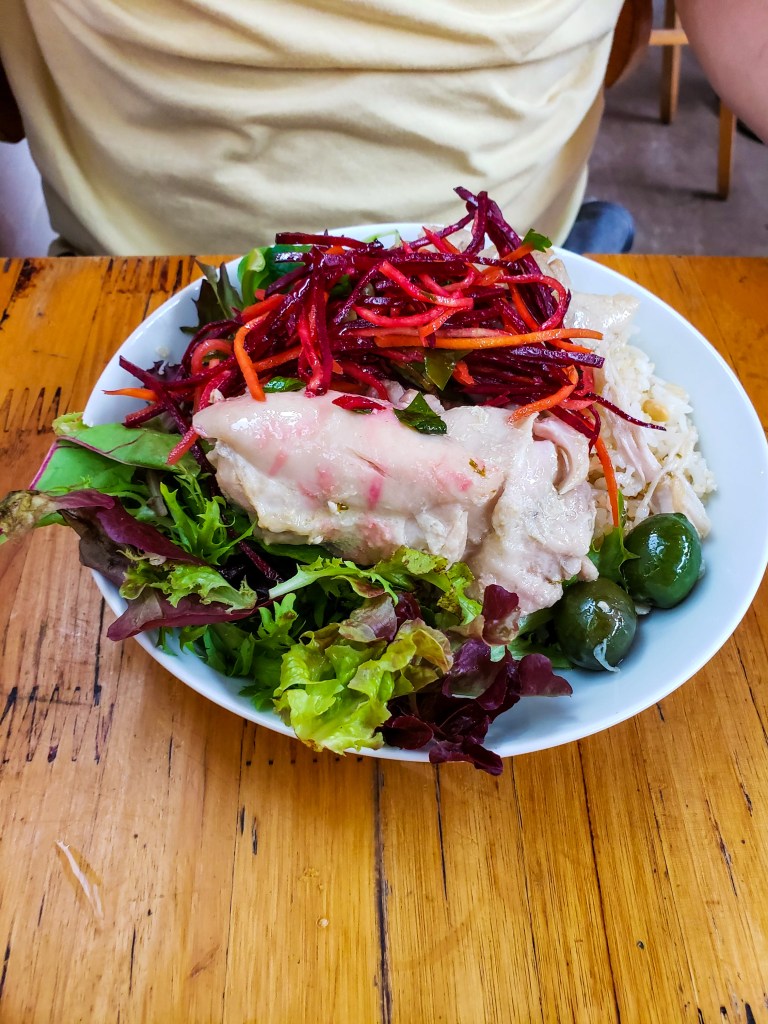
We both had chicken dishes from there that were both fantastic. My partner Chris had the lunch bowl which consisted of slow cooked chicken with green olives and herbs served with beets and daikon salad and grains. I had the chicken soboro which consisted of free range chicken mince, cooked with miso and ginger, a soy egg, greens and edamame, mizuna salad served with their CIBI rice blend. The chicken was cooked perfectly and the rice was cooked in a way that made it some of the best rice I have eaten in a long time. I did not feel bloated or as if I had eaten too much food after this meal, it is very nutritious and a perfect serving. I paired my meal with one of their in house made summer drinks. I would highly recommend checking this place out if you get the chance and you find yourself on Smith Street.

It is a great environment for doing some computer work, going in for a treat or tea/coffee, or for an early or later lunch.

Location: 33/39 Keele St, Collingwood VIC 3066, Australia

Phone Number:+61 481 398 686

Menu:


5) Saba’s Ethiopian Restaurant

Vegetarian Combination

This was my first time eating Ethiopian food and after the experience I had at this restaurant, it will surely not be my last! I found this restaurant wandering down Brunswick Street when I was very hungry, saw their menu in the window and told myself I had to give it a try. They have a celiac safe and vegan friendly menu, I was told their chef is celiac, so they know all about how to serve you safely! Music to my ears.

Injera Basket

All meals are to be eaten with your hands using the fantastic Injera bread, not using utensils, however, I did see a few people using utensils to eat so this may be an option if you prefer. I went with the vegetarian combination where you get to choose three of their delicious vegetarian dishes, and believe me when I tell you, if you are not vegetarian, you will not be disappointed. It comes in a beautiful Injera basket with a plate inside of your Injera bread, which is made of teff flour. After this you are served your three servings of the vegetarian dishes you chose. I went with the Ful, Shiro and Dinish dishes, all were very flavourful and had individual unique spices and ingredients used. The Ful is made with fava beans, spices, egg and feta cheese (this can be made vegan if preferred), the Shiro is a chickpea and berbere paste with garlic and ginger, and the Dinish is potatoes, cabbage and carrots cooked in turmeric and other spices. Every single one I want to eat again, this is a very filling and nutritious meal.

The staff is absolutely lovely and the environment is just the same with a few Injera baskets beautifully placed on the wall to admire. I cannot wait to go to this restaurant again when I am back in Melbourne.

Location: 328 Brunswick St, Fitzroy VIC 3065, Australia

Phone Number:+61 3 8589 0442

Menu:


Phlegm and Celiac Disease

ILLUSTRATIONS BY RYAN SNOOK. PHOTOGRAPH BY JEFF MINTON (GROOMER: STEPHANIE NICOLE SMITH)

The year 2019 will be remembered for a lot of things, but one I will remember well is how many times I was sick with a respiratory cold last year. On hand, I have had 8-10 colds just last year alone starting in January. I went home to Ontario last Christmas and came back with a cold, this bugger did not go away for weeks. I was told by many patients and friends of mine in town that it is a longer cold and will go away soon, so beside what my conscious was telling me to do, I did not go see a doctor. Then I went to Arizona…almost missed my flight and had to run through the airport to catch the plane. This is when I thought to myself, something is terribly wrong.  It felt like I had a chunk of bubble gum stuck in my air passage, and I could not catch my breath through my nose or mouth. Coughed up a bunch of phlegm and kept running, because, I was NOT going to miss this flight. Long story short, I met a not so happy customs lady that clearly did not understand the words, “I have 10 minutes to get on my flight.” I got on the plane and had an amazing trip hiking, exploring and coughing up about 10 pounds of phlegm.

Why the drawn out story? Because I want you to learn from my mistake, if you have a productive cough for more then a week…go see a doctor! I got back from the trip, 5 weeks after the cold had begun, and was diagnosed with bronchitis. I have never had bronchitis before in my life. I was placed on two rounds of antibiotics, because the first round didn’t touch it; and I’m sure you can imagine how much my gut loved this…not really.

Gross photo, I know. This is what was coming out of my nose after getting back from Peru.

For 11 months after the first cold in January, that turned into bronchitis five weeks later, I have had cold after cold, and was lucky enough to come home with a souvenir from Peru, a sinus infection. I have woken up with phlegm in my throat and nose every morning since and have been woken up coughing in the night due to nasal drip. It was not until I decided to go back on the hypoallergenic diet for a month that I was finally phlegm free! Then I went back to eating grains, processed foods and a bit of dairy and, BAM, it was back. This had me thinking, can my gut health as a celiac (or those of you who are not celiac), have an effect on my respiratory system? 

Now, as celiac disease is an autoimmune disease of the small intestine and can indirectly effect the whole body, I knew I could not be far off with this assumption, considering 70-90% of your immune system is housed in your gut. So I started researching, and I am here to give you the results! Needless to say, I was right…

There have been many cases of people within the world with chronic pulmonary conditions, being diagnosed with celiac disease and after going on a gluten free diet, the pulmonary symptoms decreased and improved. Even though having respiratory issues with celiac disease is a rare case and is an atypical symptom, if you have a leaky gut (intestinal hyperpermeability), there is a chance your brain, lung tissue, skin and blood vessels are effected and can lead to edema in the body.

One of the top reason’s for repeat infections and illnesses of the respiratory tract such as pneumonia, bronchitis, and sinus infections could be due to damage of the gut lining. If your gut lining is damaged, your immune system is compromised and this can lead to development of any infection especially if you are exposed to bacteria and viruses.

Putting this into relation of a celiac, if we consume just a crumb of gluten, our gut lining will be damaged due to the villi flattening which in turn damages the immune system and can increase the likelihood of infections throughout the whole body, not just the respiratory system.

Another reason for infections of the respiratory system could be due to malnutrition that is commonly seen in inflamed celiac’s who have ingested gluten. If the villi are flattened in the small intestine, the vitamins, minerals and nutrients that are essential to help fight off infections will not be absorbed. 

One major nutrient that is typically not absorbed with celiac disease is iron. If iron is not being absorbed, anemia can occur within the body and if there is not enough red blood cells transferring enough oxygen in the body, people can feel short of breath even with minimal exertion. This is something I can relate to because one symptom that I experienced growing up was anemia; I was always short of breath. Today, knowing that I am celiac and eating a gluten free diet, I am happily no longer anemic after years of trying to correct it. Instead, I am on the boarder of no longer being iron deficient (yay!) and my iron levels are increasing due to a gluten free diet and my gut lining healing. 

However, I think why I am not 100% healed and having chest infection after chest infection along with many other symptoms in my body, is due to consistent accidental exposure to gluten when going out to eat and traveling. I know I have had gluten exposures because in the year 2019, the Tissue Transglutaminase Antibodies (tTG-IgA) in my blood have stayed high and the iron levels have been fluctuating all year.

Currently for the last 3 days, I have gone back on a grain free, dairy free and whole food diet (pretty much a paleo diet), and today I did not wake up having to clear my throat of phlegm in the morning! I am excited to see how many more lingering symptoms will decrease with this diet change.

It has been said that going on this type of diet helps to decrease inflammation within the body. However, doing this diet for a few days to a week will not be enough time to fully correct and heal your body. This is a diet that needs to be followed for 6 months to a year, because it takes this long for the gut lining to heal and function properly again.

In conclusion, 14-20 breaths a minute is normal, but if you have a chronic cough, constantly clearing your throat, or have post nasal drip, you may want to see if grains or gluten is the cause. This is not to say you have celiac disease but you may have some inflammation within your body that needs to be corrected and needs time to heal.

References: 

https://glutenfreern.com/the-relationship-between-the-respiratory-system-and-celiac-disease-ep028/

https://www.researchgate.net/publication/236066468_Hemoptysis_in_patients_of_celiac_disease_with_disproportionately_severe_anemia_Tip_of_the_iceberg

https://thorax.bmj.com/content/57/1/91

https://www.pediatriconcall.com/pediatric-journal/view/fulltext-articles/986/J/0/0/521/0

https://www.ncbi.nlm.nih.gov/pubmed/18603176

Please Keep This Disclaimer in Mind:

Articles are for educational purposes only and are not intended to diagnose, treat, cure or prevent diseases. We cannot and do not provide medical advice or specific advice on products related to treatments of a disease or illness.

You must not rely on the information on our website as an alternative to medical advice from your doctor or other professional healthcare providers.

You should never delay seeking medical advice, disregard medical advice or discontinue medical treatment because of information on our website.

It is your responsibility to consult with your professional health care providers before starting any diet changes, exercise or supplementation program, and before taking; varying the dosage and / or ceasing to take any medication.

We do not collect any personal information or store cookies.  You can turn off cookies on your web browsers.